Taking Off Limitations
Taking Off Limitations
Was there ever a time as a child when you believed you could fly?
Not as a metaphor. Actually. You climbed the couch, spread your arms, and jumped, certain the air would hold you.
Somewhere along the way, you stopped jumping.
Not because the dream was wrong. Because someone, or something, taught you where the edges were. And you believed them.
Those edges have a name.
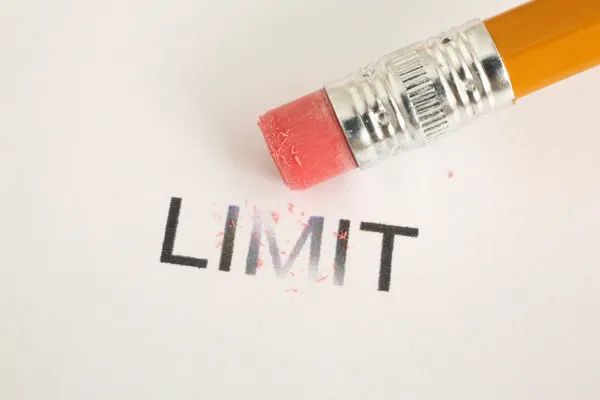
A limitation is anything that restricts our choices, our actions, our growth, or our sense of what is possible.
Some limitations are real. Time, resources, health, responsibilities, and circumstances can create genuine constraints. But other limitations are internal beliefs that feel like truth. They feel like facts, so we stop questioning them.
Limitations are interesting because they often serve a purpose before they become a problem. They help us feel safe, accepted, prepared, or in control. But somewhere along the way, a real constraint can harden into a rule. A rule that continues governing us long after the circumstances have changed.
When a Constraint Becomes a Story
Take the thought, "I don't have time."
In this moment or season, that may be true. You may not have an hour to take a workout class, especially when that hour becomes nearly two after driving to the gym, getting set up, and returning home. You may have children to wake, lunches to pack, and a full day already waiting for you.
But "I don't have time today" can quietly become "I never have time." A temporary constraint becomes a permanent excuse.
We say we don't have time for a class, but we make time for a vacation. We say we don't have time to exercise, but perhaps the real limitation is our all-or-nothing thinking: "If I can't do a full workout, why bother?"
What if you gave yourself five minutes to move your body? Five minutes may not satisfy the part of you that believes it only counts if you do it perfectly. But five minutes is still an act of care. It is evidence that the old rule no longer gets to make every decision.
Our actions are often an expression of our priorities but, changing those actions does not have to begin with a dramatic overhaul. Sometimes freedom begins with one small choice.
The Limitation I Know Personally
One of my own limitations is: I have to do everything myself.
That belief grew from self-protection. After years of people disappointing me, letting me down, or failing to follow through, a tape began playing in the back of my mind: "People won't do what they say." "They won't do it the way it needs to be done." "If I want it done right, I have to do it myself."
So I don't always give people a real opportunity to help. The moment I sense that someone might forget or do something differently than I would, I snatch it back.
That protects me from disappointment but, it also creates the very outcomes I don't want. Relationships become fragmented. The other person feels that their work is never good enough. My standards become impossible to meet, and I end up overwhelmed, resentful, and alone in responsibilities I was never meant to carry alone.
The limitation makes me feel in control. In reality, it keeps me from building trust.
That is what limitations do: they offer short-term protection while quietly creating long-term confinement.
Before We Learned to Shrink
Think about how most of us begin life.
Children are filled with imagination. We pretend we can fly. We become doctors, superheroes, musicians, singers, and professional athletes. We jump higher, throw farther, scale walls, and create entire worlds. We are curious. We are free.
Then someone sees something in us.
You have such a beautiful voice.
You can draw.
You are going to be an amazing soccer player.
You are so creative.
Someone believes in us, and we latch onto that belief. Parents or caregivers sign us up for classes, put us in sports, or give us space to practice. We earn the A, score the goal, finish the drawing, or stand on the stage. Each experience feeds the belief: I can do this. So we keep pursuing the idea, the dream, or the passion.
But the opposite can happen just as easily.
We reach for something and hear:
We don't have money for that.
Oh, honey, this isn't your thing. Let's find something you're good at.
We don't have time for that.
Don't make a mess.
You always forget. Really? Again?
We sing the song rolling around in our hearts, and someone laughs because we are out of tune, so we stop singing. We draw during a game of Pictionary, and someone says, "What is that? You can't draw." We write something meaningful and receive feedback that our thoughts are not connecting. What we hear is not, "This draft needs more development." What we hear is, "You can't write."
We love a sport, but then we have a terrible game. We are already beating ourselves up when a teammate, coach, or parent yells, “What were you thinking? What are you doing? Get your shit together.”
Slowly, we shrink.
I'm not enough. Why should I keep doing this if I never measure up?
How Limitations Take Root
Our minds are powerful. A thought becomes a story. That story influences our actions. Those actions become patterns, and the patterns eventually appear to prove that the original story was true.
Limitations can grow from:
Fear of failure, rejection, judgment, success, or uncertainty
Family, church, or cultural messages about who we should be
Painful experiences that taught us to avoid risk
Comparisons: I could never do what they do. Why even try?
Labels given to us by parents, teachers, coaches, leaders, peers, or children
Repeated disappointments
A desire to remain loyal to the people or environment we came from
A limitation can begin as protection and eventually become a prison.
It may even disguise itself as responsibility, personality, preparation, or fate:
I'm not qualified.
I'm too old to start again.
This is just who I am.
People like me don't do things like that.
This always happens to me.
I'm just being realistic.
No one else can do it right.
Putting myself first is selfish.
I need a perfect plan. I have to be ready.
It's not in the cards for me.
I wasn't born into the right circumstances.
These beliefs do more than stop us from dreaming. They shape our everyday choices: what we attempt, what we avoid, what we tolerate, what we ask for, and what we believe we deserve.
Why We Hold On
Why would we willingly put ourselves in a position to be rejected again? Why risk failing, disappointing someone, or exposing our shortcomings?
Vulnerability can feel awful. What if people see our flaws and decide not to love or accept us?
We want to be seen. We want to be heard and understood. We want to feel loved, accepted, and safe. We want to know that we matter. If stretching beyond what is familiar leads to laughter, criticism, or another reminder that we are "not good enough," why would we keep reaching?
Limitations can make us feel safe because if we don't pursue the thing, we cannot experience the pain of it not working out. Our brains are wired to protect us, and avoiding pain can feel like wisdom.
But safety and freedom are not always the same thing.
One day, when you look back on these moments, will you regret ignoring the knocking inside you? What happened to the childlike voice that once said, "I can fly!"
Hold the Limitation Up to the Light
What if you could look at a limiting thought, fear, or belief without immediately obeying it?
What if you treated it like an experiment - something to examine rather than a fact to accept? What if you held a different truth beside it and allowed possibility to swirl again?
There is a quote often attributed to Vincent van Gogh:
"If you hear a voice within you say, 'You cannot paint,' then by all means paint, and that voice will be silenced."
Whatever the exact origin of the words, Van Gogh lived this message. He kept painting. He kept drawing. He received little of the recognition during his life that his work would eventually command, but he continued creating.
I wonder whether, at some level, he did it simply because painting was his to do.
That may be the real way through a limiting belief: not arguing with the voice forever, but taking an action that makes the voice less powerful.
Pick up the brush.
Write the sentence.
Move your body for five minutes.
Ask for help and resist the urge to snatch the task back.
Take the class. Sing the song. Kick the ball. Begin again.
Reintroduce Yourself to the Dream
What might happen if you allowed yourself to experience childlike wonder again?
Pick up the pen, the ball, the instrument, or the thing that first made your soul come alive. Do it for the child and the adult who fell in love with the dream before success and failure became the only measures that mattered.
Start small. Reintroduce yourself to the dream. Focus on what you can do. Celebrate the win, then do it again tomorrow. Release the expectation that you must already be an expert. Give yourself permission to be a beginner; to laugh, learn, make a mess, and do it again, like a child playing in a sandbox or dipping their hands into finger paint.
Taking off a limitation does not mean every obstacle disappears. It means we stop allowing an old story to make our decisions for us.
The script you inherited is not the script you have to keep living. You can question it. You can rewrite it. And with one small, courageous action at a time, you can begin creating evidence for a new belief: Maybe I can.
What limitation are you ready to take off?
What might become possible when you do?
Take the first step. Open your wings.
Fly.